Sunday, April 15, 2012

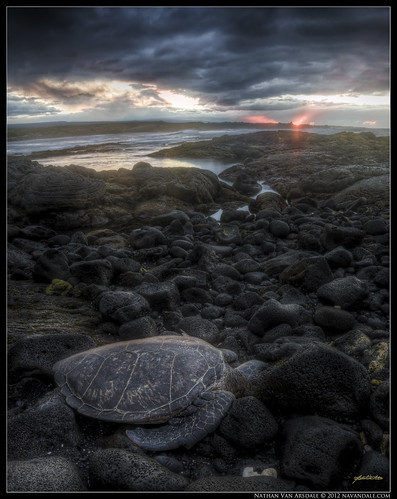
Cabrillo


Cabrillo, originally uploaded by navandale.

Via Flickr:
Cabrillo National Monument is the southwestern-most point in the United States. I recently visited San Diego as a part of a tour with the University of Nevada, Las Vegas Chamber Chorale, for which I am the Graduate Assistant and tour manager. It was a long and enjoyable tour, and we sang at numerous amazing venues, including the Mission Basilica San Diego de Alcala... the oldest church in California.

I've been wanting to do more long-exposure images of waves on a rocky shore, so when I got the opportunity to make my way here, I jumped at it.

I knew that I would have to cross a military base to get to the monument, but I didn't think that I'd have to clear security. Well, I took a taxi from my hotel, and after $30 we arrived at the guard shack at the gate to the Naval base. The guard told us that the park was closed, to which I replied, "Oh, I know, we're not going to drive in the park. He's going to drop me off and I'm going to walk down to the shore and do some night photography." She said, "It's a bit dark for photos, don't you think?" "Actually, I think it's perfect. We have a nearly full-moon, and that's why I have a tripod." She could tell that I wasn't going to hurt anything, so she let me through.

I then walked down to the shore, making sure not to veer onto any coast-guard or navy property. I found a promising composition close enough to the break that I knew I'd get some cool images, but far enough away that my camera wouldn't get wet. I was wrong.

As I looked through the viewfinder I was blasted with a surprise spray from the crashing wave below, and got absolutely soaked. I was less concerned about my cold, wet jeans than I was about my camera. I retreated up the rocks to dry land and proceeded to dry off my camera and clean my lens. Not wanting to repeat my folly, I continued along the shoreline until I found this nice little cove. "This is perfect," I thought. I climbed down and set my camera up facing north towards the orange sky. I first captured the scene at a high ISO with a 30 second exposure, just to make sure I would like the composition. Then, I used my handy exposure-calculator app on my DriodX to determine how long my long-exposure should be at a low ISO and higher aperture.

Happy with the images I captured, I decided to head on back. It was, after all, nearing 1:00am, and I had to sing in the morning. Unfortunately, there was zero signal for my phone.

As I walked back, I tried to call the taxi driver to let him know to come pick me up, but the call kept dropping. Not 100 yards into my uphill trek I saw approaching headlights. As the lights got closer I could see that the vehicle was a truck... then I could see it was a police truck. I politely waved and intended to just keep walking, but the police truck stopped.

The window rolled down, and I knew I would get some sort of talkin-to from the authoritar, but then I heard a gregarious female voice greet me. It was the guard from earlier. She was relieved from her shift, so she figured she would come make sure I was ok. Awful nice of her. Even nicer, she then offered me a ride back to town. SUPER LIKE! I hopped into the back of her cop-car, and must say that I never pictured my first ride in the back of a police vehicle as being so pleasant. We chatted a bit when another pair of headlights came our way. I muttered, "I think that's my taxi" as it drove past. "Maybe you should flash your lights at him" I suggested, but it was too late. We passed each other. So, she turned around, turned on her cop-lights, and chased him down. I could only imagine his confusion and anxiety at the oncoming lights.

I thanked the nice officer, and got in my cab to head back to the hotel. After apologizing to the cab driver, he informed me that he saw my number on his caller ID, and assumed I was ready to be picked up... I love how things work out!

This is not an HDRi, as many of my images are. This is a single exposure facing north. Viewing this image large allows you to see the star trails, and exquisite detail throughout. The light in the background is from what I believe is a streetlight. The only editing I did to this image was a tiny bit of sharpening, and a tiny contrast adjustment.

Saturday, January 21, 2012

The Valley of Death. Black and White HDR's, and finding the Abstract in Nature

I wanted to get to Death Valley while there was a full moon, because to me, Death Valley photographs stunningly well in black and white... and I'd much prefer hiking under a full moon than under a full sun!  Moonlight is so soft and diffuse that everything takes on a deep, mellow blue cast... pretty much black and white.


Rather than setting up my camera to specifically shoot in Black and White, I shoot in RAW, which allows me to edit the image in color before converting to Black and White.  Sometimes though, the mellow blue also works for a color image:
Death's Night Light - Midnight panorama from the Mesquite Sand Dunes
But, like I said, moon light makes for some great Black and White images:
Badwater Salt Flats reminds me very much of the moon.  Using my 15mm Canon Fisheye distorts the horizon slightly, adding to the feel of being on another world. 
Death Valley actually offers a tremendous amount of photographic opportunities... but can be quite monotonously red and orange outside of sunrise and sunset hours.  So, I took advantage of the early morning sun light to capture the contrasty shadows of mountains, hills, and sand dunes and get some beautiful Landscapes and Abstractions. 


Balance - Yin-yang abstract in Mesquite Sand Dunes.
Head of the Serpant - Sunrise at Mesquite Sand Dunes.
Kool-Sand - Landscape Abstract of the Mesquite Sand Dunes


Flaming Lochs -
Mesquite Sand Dunes
Landscape abstraction
of Flaming Blond
lochs of hair.


Salt Creek - HDR from 3 RAW images.
Yep, that's not snow. It's salt. This is Death Valley's Salt Creek. I initially wasn't planning on visiting salt creek, but as I drove past it I had to stop and photograph the salty, artery-like channels of shallow water. I knew that these would make beautiful Black and White images because of the contrast of white salt with the dark water. So, using the warm mid-day light I explored various compositions.  I couldn't imagine doing that during the warmer months.  As a black and white HDR image, the ground takes on qualities of a cloudy sky... subtleties of light/dark gradients that would otherwise be missed in a color photo add power to the otherwise monotonous landscape.


Thanks for reading!  Be well! :-)

Sunday, January 15, 2012

Salty Shores: How to take Full Advantage Photoshop's Photomerge Feature; and justifying HDR processing

Why even bother shooting with a tripod?  I take really pretty pictures  with my smartphone or point and shoot camera, both of which fit in my pocket!

Why shoot in HDR?  They don't even look like photos!

Why not compose the scene in-camera and then crop the scene to make a panorama or square composition?  Why go to all the trouble of photomerging?

"Whiterock Sunset" White Rock Bay, Antelope Island State Park, Salt Lake, Utah


What a great time I had in Salt Lake City!  I was recently there auditioning for the Metropolitan Opera National Council, Utah District Competition.  Although I didn't win, I had a great time and sang well.  I haven't spent much time in Northern Utah, so I wanted to take full advantage of being in such a beautiful area.  I was hoping to go skiing, but the lack of decent snow promised that the skiing wouldn't be as fun. So, I sought out photo-worthy places... and where better than Salt Lake?

After a looking on the map, I figured Antelope Island would be the best place to go to get a good view of the sunset... although some locals suggested that I wouldn't find the island all that beautiful.  Fortunately, I decided to listen to my gut, and made the short drive to Antelope Island State Park.  I arrived around 1:30pm, so I had plenty of time to explore the island.  The Island is rife with wildlife.  I saw numerous Bison, Birds of Prey, Rabbits, Coyotes, and Beavers.  And, because it was so cold, there weren't a lot of people on the island. 
Bison Grazing in a snowy field near the visitor center. HDR from 3 RAW images.
Stopping for a quick pose before returning to the hunt. These Coyotes seemed to really enjoy hopping through the field looking for food... and in their impressive winter coats, these are nothing like the desert Coyotes near Vegas.
A camouflaged Coyote hunting for dinner just before sunset


Eagle Scouting.


This beaver looked more like an Ewok when I first approached it.
Weary and tired, it looked at me, yawned, and went back to sleep after 
scratching the snot off its nose.


Needless to say, I really enjoyed what the island had to offer.  But, it was getting close to sunset, so I figured I'd make my way to White Rock Bay on the northwest side of the island.  I parked at the trailhead and made my way towards the shore, about a 20 minute walk.  I discovered why the bay was called White Rock Bay, as there were numerous boulders scattered along the shoreline.  These would make a perfect foreground, so I started looking for interesting compositions.  

I was excited to have a good sunset, because the clouds overhead promised some dramatic colors.  But as I waited, the clouds shifted south, opening up the sky over the sun.  Bummer!  Oh well, I might as well stay and see what I get.  Then, right as the sun started settling on the horizon, some clouds moved back in and caught the spectacular light.  I made the best of the 30 minutes of changing light during the sunset, and captured a few nice compositions. 

Mud Flats
As usual, the scene before me was just too grand to capture with just one in-camera composition. So, I set up my compositions to photomerge in Photoshop.  

Here's the Hows and Whys:

Really, the whys are pretty simple:  
Q. Why even bother shooting with a tripod?  I take really pretty pictures  with my smartphone or point and shoot camera, both of which fit in my pocket!
A. Of course you take pretty pictures with your point-and-shoot or smartphone. That's what they're for, capturing a moment that you would otherwise miss.  Here's an image of the same scene I took with my Droid X smartphone with an 8 megapixel camera.  It got a lot of positive comments on Facebook when I uploaded it, and it is, indeed, a pretty image.  But, look closely and you'll notice that the detail is a bit washed in the mountains, and the foreground is very dark.  Also, the Highlights in the clouds are blown out on the right side of the frame, and the entire image is not very sharp.  The reason for a tripod is to steady the camera to ensure the sharpest image possible.  Typically, point-and-shoot cameras/smartphones photograph at a wide aperture (neighborhood of f4), which allows for faster shutter speeds, and decent instant portraits, but also a narrow field of focus.  When photographing landscapes, it is necessary to have a wide field of focus, and thus a narrower aperture (f18-f22).  This narrower aperture makes it necessary to have a slower shutter speed, in order to get a proper exposure... thus, requiring the use of a tripod.
White Rock Bay from my Droid X
Q. Why shoot in HDR?  They don't even look like photos!
A. Often times I am disgusted by the over-processing of HDR images I see on Flickr.  I don't even bother with those. But still, when non-photographers see an HDR image, one of their first responses is, "Oh Wow, is that a painting?" or, "That doesn't even look like a photo."  Well, they're right.  HDR images don't look like typical, one-exposure photos. People are used to seeing a photo-sensor's interpretation of the light-levels of a particular scene, which often times result in blown out areas of light and/or dark.  A High Dynamic Range image covers the light levels by more stops than a single exposure, so what we see in the image is closer to what the eye sees (if the processing is done right).  Now, I could get into a long discussion of artistic license when processing photos, and how often times nature photos look even better than real life in order to reflect the ideal... but I won't.  Below is an image of White Rock Bay taken at what would be considered a "proper" exposure for the midtones of the scene.
A Midtones Exposure (or, AEB=0) of White Rock Bay. A similar image to that taken by my droid.  You can see that this is much sharper, and the color quality is a but deeper... but there is still a lot going on in the foreground that we're missing out on.


Now, since I'm shooting in RAW, I could always go back and tweak the image in Adobe RAW by bumping the fill light. See below.
Screen-shot of the Midtones Image being Edited in Camera RAW. Very Pretty... But now the sky is washy, and we're still blowing out highlights.
Obviously this is a viable option... if you just want to share a pretty image online.  But if you want to turn your image into a printed work of art, you should really be taking the utmost care in its processing, which means minimal tweaking.  When zoomed to 100%, any fill light over 25 creates weirdness in the image... and yes, that's a technical term. So, since we're shooting on a tripod, let's go ahead and set our Canon camera's Auto Exposure Bracketing (AEB) to -2, 0, +2.  And, using either our cameras self-timer remote, or our shutter release cable, we can capture the Midtones, Highlights, and Shadows exposures of the same scene.  At home, we can combine these images using Photomatix Pro to get this:
This is the same scene straight out of Photomatix Pro. Notice the exquisite detail throughout. 
Now, this is a decent sunset image.  Pretty good reason for shooting in HDR, I think. But, the composition isn't quite as dynamic as the scene made me feel when I was there.

Q. Why not compose the scene in-camera and then crop the scene to make a panorama or square composition?  Why go to all the trouble of photomerging?
A. Really, there are a couple of reasons. First of all, I like a prominent, attention getting Foreground that leads the eye into the rest of the scene.  But, often times, in order to get the detail I want in the foreground, I have to sacrifice a lot of the background, including the sky.  The only feasible way to include the sky is to turn my camera on its vertical axis, which would then cut out the sides of the foreground. 

Also, a single frame only has a certain amount of mega-pixels, meaning that by cropping the image into a panorama or other smaller composition, you're sacrificing all sorts of detail, and will never be satisfied with your prints (unless they're small prints, then you might). When you create a panorama or vertorama, you have a lot more pixels to work with, and thus larger printing options.

So, I will usually place my camera on its vertical axis and take a series of bracketed exposures, carefully moving each series about 1/3 to either side, allowing for an adequate amount of overlap for the photomerge feature in Photoshop.  With the Mud Flats image above, I started from the right to the left, carefully taking 6 sets of 3 bracketed exposures, processed each set using Photomatix Pro, and then combined the images in Photoshop.  With the top image, I again started from right to left, taking 3 sets of 3 bracketed exposures, and then moved the camera up 1/3 of the frame to include the sky, and took 3 sets of 3 bracketed exposures moving left to right... thus resulting in a square composition with a prominent foreground leading to a huge background.  Total processing time for each image was around 15 minutes.


Here is my final image again, for easier comparing and contrasting.
I suppose this post was a little longer than normal, so I appreciate you reading.  I'll tell ya what, if you leave a comment, I will send you one of my 2012 Fine Art Calendars, free of charge... all you have to pay is the shipping.

Thanks for reading! Be well! :-)

Thursday, December 29, 2011

On the Fringe--A look at Panoramic Composition and Treating HDR Images for Edge Fringe


Merry Christmas, Happy Festivus, Happy Hanukah, Happy New Year, Happy Day, Happy Life! It's been a while since my last blog post, and for that I say, "You're welcome." When I created this blog, I did so as a way to share photo-tips and interesting photo-venture stories. I wanted to avoid turning this into a daily journal on days when I'm not having fun with photos. Fortunately, my studies as a Master's Student in vocal performance at the University of Nevada, Las Vegas have allowed me to nurture my artistic needs while precluding me from going on as many photo-adventures.
                                      Eden Giving Rise, originally uploaded by navandale.
Via Flickr:
Sunrise on Thanksgiving Morning in the Garden of Eden in Arches Naitonal Park near Moab, Utah. This is a seldom photographed view of the popular South Window Arch and the eastern-most part of the rock formations that make up the Garden of Eden. I was quite thankful to get this glorious sunrise, as the last time I was here the sky was not nearly as interesting.


I've decided that I quite enjoy visiting National Parks on holidays, because not nearly as many people are present. Although, I did run into a few people after I packed up and headed toward my car. My family always has Thanksgiving dinner the day after Thanksgiving, letting me take advantage of uncrowded national parks and still share in feasting!


The reason this view is rarely photographed is because it covers a 180 degree field of view from southeast to northwest. This is a panoramic image created from 10 vertical HDR frames. Each HDR frame was created from 3 RAW images using Photomatix Pro and Photoshop CS4.


How I did it: 


First of all, I had my typical gear: Canon 40D, Tamron 18-250, Manfrotto carbon fiber/magnesium alloy tripod. I was shooting at a bracket of (0, -2, +2), f18, ISO200. I balanced my exposure to the clouds in the sky, rather than the foreground, giving me a midtone exposure of 1/6 second, so my bracketed exposures were (1/6, 1/25, 0.6).  


WHEN SHOOTING FOR A PANORAMA, keep in mind the basic rules of composition: 
1) Have something interesting in the foreground. Here it's the doughboy-shaped rock formation and the arch; 
2) Capture more sky if the sky is interesting, and more ground if the ground is interesting (in this case, both were interesting); 
3) Align the horizon and avoid unwanted objects (litter, fences, cars, people, etc.); 
4) Generally use a wide enough aperture for wide angle nature shots (f18-22), and a narrow enough aperture for better depth-of-field with zoomed focal lengths (f2-5.6).
5) Compose enough of the scene to allow for cropping after the panorama is created (The photomerge process will usually distort the image a little, making cropping necessary);
5a) Avoid unnecessary negative space (cloudless sky, desolate/monotonous/boring landscape)
6) Overlap wide-angle frames by at least 1/2 to compensate for lens distortion, and zoomed frames by at least 1/3
7) Compensate for changing exposure values over a large scene by finding the midtones of the entire scene (when bracketing for HDR images, also make sure that your images sufficiently expose the highlights of clouds and foliage... sometimes that means taking 6 exposures to capture all of the highlight detail).
8) ALWAYS USE YOUR TRIPOD... and a decent one. I've seen enough people try to set up their SLRs on those 12" snaking tripods... you've seen em in camera stores and airports.  They're a waste of money. Go ahead and spend the extra $20-30 on a sturdy tripod that stands at least a few feet tall... and use it! Sturdiness is key when capturing beautiful landscape images.


Generally, a good HDR landscape histogram will look like this
I USUALLY EXPOSE for the sky when shooting sunrises or sunsets, because part of the beauty of those times of day comes from the awesome clouds. Which is to say that I measure the clouds as the midtone of the scene, and set my shutter speed accordingly. This is the histogram for the completed image above. Notice how, because the sun is not actually up yet, there are no blown out highlights... otherwise it would be ok to have a little blown out bar on the far right of the histogram. Thus, the sky has exquisite detail when zoomed in to 100%.  


BUT WAIT, now that we're zoomed in to 100%, we might be able to see all sorts of anomalies and eyesores: Noise in the sky, fringed edges, and weird color variances from frame to frame. 


It used to frustrate me when I would complete an hdr image, only to discover that there was weird green and red fringing around the highlight edges. I would take the HDR into Adobe RAW, knowing that there is a defringe option under the lens calibration menu. unfortunately, this option would not help, and I'd be left to either accept the fringed edges, scrap the photo, or try to somehow manually fix the edges.
I have tried all options, and none of them seemed very just.  There must be a way.


Luckily, the answer came to me when I noticed that the white balance was different from bracketed image to image in one of my bracketed sets. So, I opened the RAW images in Adobe RAW to adjust the white balance. In this sunrise image taken in Yosemite National Park, the sky was much warmer, but the camera read the white balance as cooler. The quick fix was to set the white balance for all 3 images to "Shade" and then make minor adjustments to the Temperature and Tint sliders.


Then, I zoomed in to 100%, and this is what I saw:


Those terribly fringes edges weren't a byproduct of the HDR process after all!  I could fix them in camera RAW before merging them into an HDR image. So, Under the Lens Corrections Menu I selected "Defringe>All edges."


That fixed a lot of the problem, but I still noticed some weird color fringing on the edges, so I took the matter into my own hands. The colored fringe is a byproduct of light wrapping around an edge. If the edge is facing the light source, it will be more red, if it is facing away from the light source, it will be more cyan. So, I moved the Red/Cyan fringe slider to -33, and fixed the fringe problem on all RAW images. I then saved the images as TIFF files, and merged those files using Photomatix Pro.


The image below show the adjustments I made in Photomatix Pro. Pay close attention to the histogram... notice how I don't sacrifice any shadow detail or highlight detail. I do this by adjusting the Strength, Luminosity, and White Point/Black Point sliders. Each image is different, so I rarely use the same settings. Though, generally, I won't take the strength over 90 or below 70, won't move the saturation from the 48-50 area, and won't lower the luminosity by too much. The Microcontrast and Smoothing are usually set to 10. Gamma is always at 1.00 (usually). The preview is usually different from the processed HDR, due to the computer's ability to render a 32 bit image. That's why it's important to pay close attention to the histogram.

I save the HDR as a 32 bit TIFF. If it's a frame for a larger pano, I process all of the frames under the same settings  (sometimes I will process parts of the scene with different settings to get to a truer-to-life representation of colors and levels... but that takes a lot of time and patience). After the photomerge I edit the HDR image in RAW, and in photoshop (typical edits almost always include in this order: cropping, spot-removal, levels balancing/contrast adjustment, sharpening, noise-removal).


Once I get the image to where I like it, I save it as a 16 bit TIFF. Then I add my signature via a brush that I created from a photo of my signature (don't know how? It's easy... google it), and save that as a separate TIFF file, then as a jpeg. Then I put my border around the image and save it as a separate file.  The reason for so many files: website display, printing, re-touching, and archiving.


Morning Song
Happy Holidays!  Thanks for reading!


For prints, visit my printshop.

Saturday, October 29, 2011

Im Freien (and how to add a starry sky to your golden-hour photos)

"Heaven's Perch" Starry-Sky Sunrise View From Zion Overlook.
If you speak German, you probably pronounced the title of this post properly, if not, you probably pronounced it along the lines of "I'm Freein." Im Freien [ihm (like him) fry-en] means in the open, or in the free.  That's the title of a piece of German Lieder (art song) by Franz Schubert that I recently performed for a vocal master-class at UNLV.  The translation of the text reads (summarized): "Outdoors in the expansive night, I stand ever at peace.  The bright stars let my heart not rest... A thousand arms reach to me, beckoning me sweetly there... A thousand voices call me with a tender, loving sound.  Oh, I know what my calling is. I know what my passion is.  Like the sound of a dear friend's greeting, it calls me entrancingly through the air..."


I still remember the first time I ever saw a truly starry night sky.  I was a young kid, probably about 8, and we were in Colorado visiting my grandparents.  Before that I had always lived in areas where the light pollution prevented the true splendor of the night sky from being seen.  I think it's a shame that some people have spent, and will spend, their entire lives in areas where they will never be able to see the milky way, or shooting stars.  Now that I live in Las Vegas, I often feel stifled by the weight of the city, to the point where I have to get out every few weeks.


"Take My Hand, I'll Take your Hand" Middle Emerald Pool 
This past weekend I went to Zion National Park, which is just a couple of hours away from Vegas.  I was hoping the fall colors would be at their peak, and though there was some color in various parts of the canyon, it looked like the peak of the season was still a couple of weeks away.  I was also hoping for some clouds in the sky, rather than a boring blue sky... but apparently even the "cloud-whisperer" doesn't always get pretty clouds.  None of that withstanding, I made the best of my time.  I hiked about 22 miles over the weekend, through the grottos and Emerald Pools, up and down Angels Landing, and in and out of the Subway.  Preferring to make lemonade rather than frown at the lemons I was handed, I decided to experiment a bit.  Knowing that I wasn't going to have any clouds for a pretty sunrise sky, I decided to show up at the Zion Overlook an hour beforehand to photograph the starry sky.  Then, keeping the same composition, I photographed the sunrise, and later combined the images to make a beautiful sunrise photo with an interesting sky (top image).


Later that day I hiked up to Angels Landing.  This was my first hike up Angels Landing, a hike that warns not to bring children, or people afraid of heights.  Personally, I think the warnings are a bit exaggerated, as it's a paved hike all the way up until the last quarter mile or so, and even then there are chain hand holds and steps cut into the rock.  Nevertheless, I did encounter people who were just too scared to make it, and had to turn around and head back down.  At least it was a good cardio-workout, well-worth it for the view.  Towards sunset the sky teased me with some wispy stratus clouds, but they pretty much dissipated by the time the sun set.  So, I figured I would photograph the sunset, then capture the sky an hour afterwards... I was prepared with my headlamp and extra batteries.  It was totally worth the hour-long wait after sunset.  As I was taking my second long-exposure of the stars, a meteorite buzzed overhead, so close I could almost hear it sizzle.  Since I was shooting with my 15mm fisheye lens, the meteorite looks much smaller in the photo than it did when I was there... but you can get a sense of how incredible it was.  Here is that image.
"Angels Passing Time" Starry-Sky Sunset View From Angels Landing
After I sang "Im Freien," the guest artist who was running the master class commented, "Interesting poetry.  Seems like kind of a weird person, huh?  Maybe someone who isn't quite normal?  Like maybe someone who had a little too much Absenthe?" "Perhaps." I replied. "And what do we normally call those people?" I thought to reply, "enlightened... transcendent" but before I could he answered himself, "Hippies." I chuckled a bit and furthered, "Or outdoor photographers."

How I did it...

It's actually quite easy to add a starry sky to your sunset or sunrise image.  First of all, I did my typical image capture process for the landscape scene.  In other words, they are all High Dynamic Range images created from 3-RAW files (-2, 0, +2), processed in Photomatix Pro and Photoshop CS4.  To see videos of my process, check out my earlier blog posts.  For sunrise, be at your location an hour ahead of time, figure out the composition you will want, and aim your camera slightly higher than 2/3 of the top of that composition.  With my Canon 40D I shoot a 30 second exposure of the sky at f2.8 ISO800, manually focused at just before infinity (not all the way to the end of the focus... the sky will be sharper).  If I had a camera that handled noise better, I would crank up the ISO and increase the shutter speed to avoid the tiny star trails caused by the rotation of the earth.  But I don't, and it doesn't make a huge difference, so I won't stress about it.  Then, back down to ISO 100, f20, and whatever the exposure needs to be for that morning's sunrise.  Capture your bracketed images.  Same idea for sunset, only leave your camera in place after you capture the landscape, find some way to kill an hour, and come back and photograph the sky slightly higher than 2/3s of your original composition. 

Then, when you get home, process your HDR images so they look good with the boring blue gradient sky.  Once they're processed and polished, create a new layer with the image of the starry sky.  You will need to increase the top of your canvas size (CTRL[Command]+ALT+C) by a few inches... you can crop down later. Line up the bottom of your starry sky image with the top of the landscape portion of your lower image (horizon to horizon).  They may not line up exactly due to lens distortion, which is ok. Change the blend mode of the starry sky to either lighten or screen, whichever one looks better to you.  Instant magic, now you have a starry sky along with your landscape.  You're not done yet.  You may notice a vague outline of the lower horizon from your starry sky image... go ahead and mask that out.  If you have a line from the top edge of your landscape image, apply a layer mask to it as well, and very lightly feather the edge away until it looks smooth.  If you did your job right, you should have a seamless landscape image with a nicely graduated starry sky.

Thanks for reading!  Be well! :-)

Thursday, September 22, 2011

Creation Creating Creations

Ahh the art of creation.  When you think about it, everything in the universe is constantly creating... one could say that it's our divine purpose to create... that it's unavoidable.  As humans, we're blessed with the gift of conscious awareness that allows us to create at will.  I could go on and on about the philosophical nature of creation, but today I'm just going to focus on the creation of works intended to be artistic.  I phrase it like that "works intended to be artistic" because not everyone agrees on what can be called art.  Well, I'm suspending judgment, although I have my opinions on what is "good" or "bad" art, because for someone to take the time to create something means that they're sharing a part of themselves.  Intentional creations of things that don't necessarily need to be created--works of aesthetic or audible value designed to make a statement or elicit a feeling beyond mere function--are perhaps the strongest form of human emotion.


I sang the National Anthem this morning for the State of the University Address at UNLV, where I'm studying for my Master's of Music.  I didn't add any melisma or fluff, and I sang all the correct words the way that Francis Scott Key penned them.  It seems like often times, not to knock any large-event divas, the meaning behind the song is lost.  Raised in a military family, I can't help but imagine what it must have felt like to Mr. Key to be a prisoner, to have bullets and bombs percussing the air around his head, to fight for the freedom of his home, and to see the star-spangled flag being illuminated by fire in the sky.  He wrote those words to share his emotions, to convey what was going on to future readers.  He had no idea that his words would be turned into a song sung before sporting and other events.  But his emotions live on.  As a singer, it is my job to interpret and convey the emotions that both the lyricist and songwriter intended, regardless of the language or year of the song.


When I left the State of the University Address, I walked across campus and saw a friend of mine sitting under a tree.  When I approached her to say hello and pay her a compliment, I saw that her emotional state was less than happy.  She, too, is a musician.. a pianist and singer.  When I offered a friendly ear, through tears she explained that she was scorned by her piano teacher for missing a note in a piece she had been practicing for a couple of weeks.  She was questioning whether she wanted to continue with piano, or just focus on singing.  She felt like she is not really doing what she wants with her life.  After a few minutes of listening to her, I let her know that I knew exactly how she felt.  After I had what could be called bad luck with opera auditions in Europe (that's another story, but suffice it to say my music-tied emotions were shattered for a while), I left classical singing all together and ended up traveling the world.  Of course, I still felt a deep emotional connection to the world around me, and a need to create a shareable form of that connection, and thus began my photographic endeavors.


It is very difficult to be a good musician and not be in touch with your emotions.  Most of your free time is spent practicing, questioning yourself, doubting yourself, practicing more, getting nervous, and then finally performing.  Hopefully the performance goes well, which usually happens after enough practice, but even then you focus on the little mistakes you made.  Then, people from the audience tell you how great you are... very rarely does anyone say, "Thank you", or, "I really enjoyed that", or any other personal statement.  Personally, I don't like meet and greets after a performance for that very reason.  My performance is not about me, it is for you.  Sure, I place an emotional value on the music I'm performing,  but I perform for myself.  It is always up to me whether or not I want to share it with an audience (though normally I do, because I think the world benefits when people share what's in their souls).


Which brings me back to creation.  We all place emotional value on things, but often times we're a bit too lazy to do anything about that.  Now, granted, not everyone feels the need to create... not everyone has a "feeling" personality type.  But if you're reading this blog, you're likely someone who is at least intrigued by artistic creation.


"Wait a minute Nathan, I thought this was a photography blog!  What gives with all the music talk?"  Well, when people ask what I do, I tell them I'm an artist... then they ask what kind, and I modestly reply, "In every way that I can be."  I think in song, although I haven't quite honed my song-writing skills to the point where I want them.  Since I think in song, I try to convey a sense of musical motion in my images.  In this image I took at Cedar Springs, a farm I worked at in Sedro Wooley, WA, I can hear the raspberries and sunflower harmonize with the sunset in a soothing lullaby.


I think there are a lot of people out there like me, who think in song, and who feel connected to the world and sky.  But I also think that a lot of those people have been conditioned to live their lives based on the expectations of others, thus not allowing their souls to fully be expressed.


I was recently interviewed by Fine Art Photography Weekly, which was a huge honor.  The topic of conversation was "Do what you Love".  I think that is the underlying message of this post: Create what you Love to Create.  Here's the interview.  Thanks for reading, and enjoy the show!


Monday, September 5, 2011

Procrastination and Publicity

Gosh, it's been a great summer!  So what have I been up to since May?  Well, although this is technically a "photo blog" I'm more than just a photographer.  I'm also a musician, and a procrastinating ranch-hand.  I spent my summer in beautiful Florissant, CO, helping my parents rid their ranch of Dwarf Mistletoe, and performing at the Midland Depot Restaurant at the Imperial Hotel in Cripple Creek.  I didn't do a whole lot of photography (outside of a bit of portraiture) during that time, as I was waiting for the wildflowers to bloom.

Like many of you, I'm frugal.  Unlike many of you, I'm frugal because I'm financially broke, as every penny I make goes towards student loans.  DON'T EVER GET STUDENT LOANS!!!  So, I didn't want to spend the gas and food it would take to go around and scout.  So, I spent many of my days practicing music, lumber-jacking, and working out using the P90X program.  I wrote in an earlier post about how I came across a guy buried in the snow while skiing at Sierra at Tahoe, which inspired me to get into better shape.  Well, I can gladly say that after 90 days of P90X I went from a skinny 6'3", undefined 170lbs to a ripped 185lbs of pure lean muscle, and my body fat went from 15% to 7%.

But back to Photography.  The Wildflowers finally bloomed in mid-July, and peaked towards the end of the month.  Using Andy Cook's book as a guide (A Guide to Colorado's Best Photography Locations), I decided to explore the San Juan Mountains.  I couldn't have been happier!  My goal was to get a sunrise or sunset image of Columbines in a field of flowers with a mountain backdrop.  I got more that I could have imagined.  This was the first image I posted to Flickr, which immediately got posted on Flickr's Explore.

Make sure to check out my printshop to download free desktop and smartphone wallpapers of some of my Colorado Wildflower images.  Or, you could even buy some prints for your home or office, please :-)

Here's a tip for photographing flowers... always bring either an umbrella, or reflector, or something to block the wind.  When photographing flowers, you will notice more then ever how much they move (Especially when photographing with auto-bracketed exposures).  Or, you could just count on your luck and patience... but best to be prepared, as both luck and patience tend to run out when dealing with nature.  

As I said earlier, I'm also a musician.  And although I was singing standards and strumming my guitar at the Midland Depot, I am classically trained, and sing Opera.  That being said, I have recently relocated to Las Vegas, where I'll be studying Vocal Performance at UNLV as a Master's Student.  That doesn't leave me a whole lot of time to get out and photograph nature as much, but I now live very close to Zion National Park, where I am considering hosting photo-walks in the future.

Here are some cool happenings too.  Since I returned to Vegas, I was contacted by Coffee Break Studios, informing me that my images have inspired them to create a new screen-saver App for Macs that will track your face movements, allowing you to look around the image as though you are actually there.

Also, if you live in Colorado, Colorado State University Extension has just created a promotional bookmark with one of my Columbine images for their website Planttalk Colorado, which focuses on horticultural advice for the state.

And finally, I am being interviewed by Fine Art Photography Weekly on Sept. 13 at 1:30pm PST.  Make sure you tune in to http://smibs.tv/FAPW to catch that interview.  Or, just come on back to my blog afterwards where I'll have a link to the interview.